Movement and Habitat Use of Sauger in the Ohio River
Project Overview
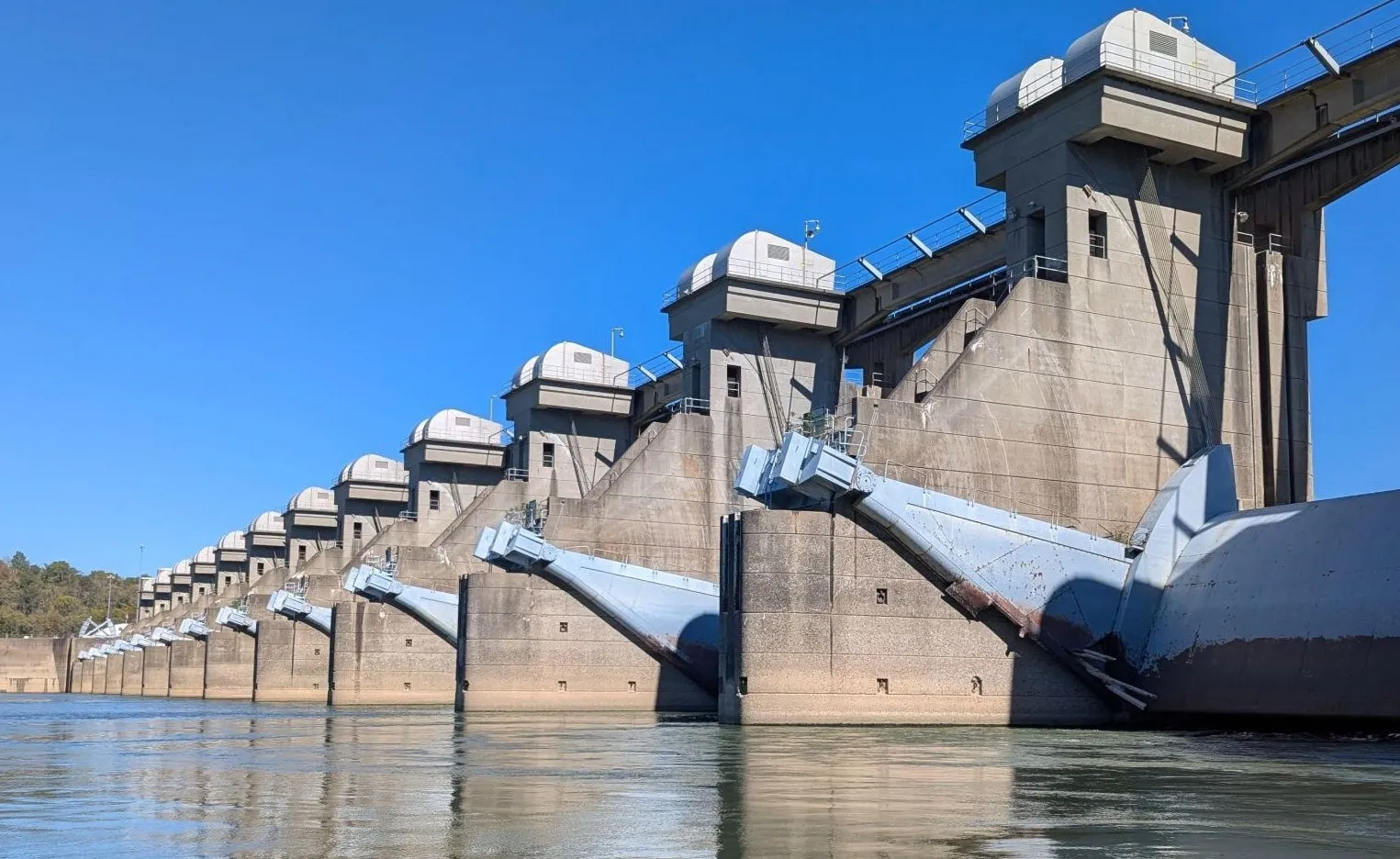
Human activity has significantly changed rivers throughout the world, especially the construction of dams. When a dam is constructed, it can dramatically alter a river’s natural flow, water levels, temperature, oxygen levels, and sediment transport. Upstream of a dam, reservoirs form, while downstream water levels can drop. This creates distinct habitats on either side of the structure. Overall, these changes can make it harder for many aquatic species to carry out their life cycle and survive.
Dams also act as barriers within the river, blocking migratory fish from reaching historic spawning and feeding grounds. This can lead to population changes, such as lower population growth rates and higher mortality. Dams also lead to aggregations of migratory fish immediately downstream.
Sauger, Sander canadensis, a highly migratory sport fish, displays this pattern of aggregating below dams in the Ohio river, where there are 19 locks and dams. Sauger will aggregate in an area called a tailwater, which is a portion of the river directly downstream of the dam. This is a popular area for angling, meaning there is a lot of fishing pressure on sauger concentrated below dams. Consequently, sauger populations in the Ohio River are suspected of experiencing “growth overfishing.” Essentially, this is where fish are caught and harvested before they can grow to full size, leaving the population to be primarily young, small individuals.
The goal of this project is to gain a deeper understanding of where saugers move in relation to tailwaters and throughout the river as a whole. Movement data can provide information on when saugers arrive at or leave the tailwater, dam passage rates, habitat preference, and mortality rates. Ultimately, this will be useful for state fisheries management agencies, who can use this data to assess current fishing regulations for Sauger, meaning the possibility of more and bigger Sauger to catch.

This study is currently taking place in the Meldahl Dam tailwater near Felicity, Ohio. In Fall 2025, 100 Sauger were surgically implanted with acoustic telemetry transmitters and externally tagged with spaghetti tags. These transmitters and tags allow us to identify individual fish and track their movements. The acoustic transmitters can be detected by various receivers placed throughout the tailwater, the Markland pool, and the Meldahl pool. This allows us to continuously track where these fish are moving. Furthermore, the external spaghetti tags allow us to learn more about catch and harvest rates of Sauger. This information is incredibly valuable for deepening our understanding of the Sauger fishery in the Ohio River.
If an Angler Catches a Tagged Fish
We ask anglers who catch our tagged fish to call the number on the bright pink external tag and report the tag ID and whether they plan to harvest the fish. You may also report fish on the Ohio Division of Wildlife website. If an angler plans to harvest the sauger, when they report their catch they should include contact information so that we can send a pre-posted envelope so that they may return the internal acoustic transmitter, as these transmitters can be reused. Anglers may also ship the transmitters themselves to the Ohio Department of Natural Resources - Division of Wildlife Inland Fisheries Research Unit, 10517 Canal Rd, Hebron, OH 43025.
We truly appreciate your participation and support throughout this project.
